

In a world full of emails, texts and instant messages, the power of a thoughtful letter remains timeless. You don’t need to be Shakespeare to craft a message that resonates; a simple, well-written letter can leave a lasting impression. The history of letter writing — from ancient clay tablets to the printing press — has shaped societies and connected people across generations. Today, letters complement digital communication by offering a personal touch that strengthens relationships and makes your message truly memorable.
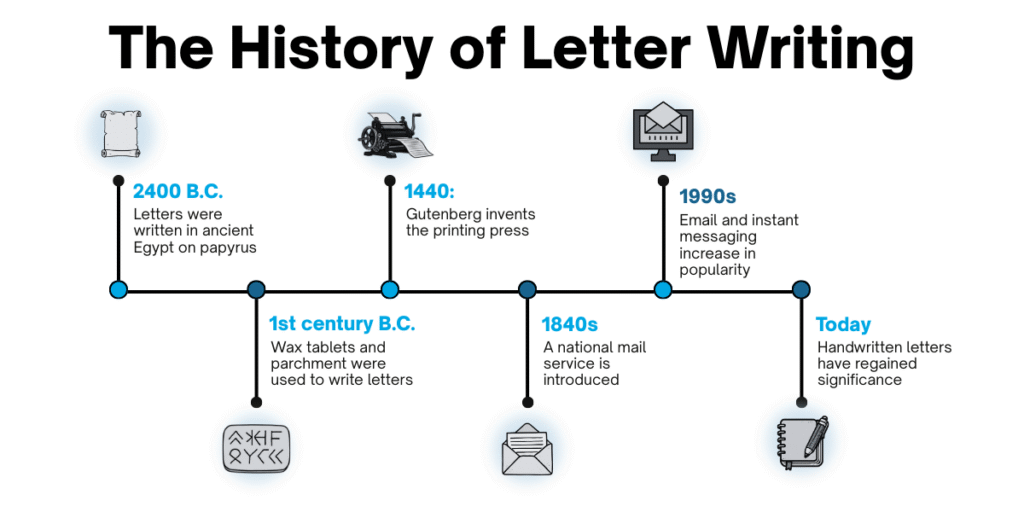
The History of Letter Writing
The history of letter writing is, at its core, the story of how people have stayed connected across distance. Long before modern technology made instant messaging possible, letters served as the primary means of sharing information, recording events and maintaining personal relationships.
Some of the earliest known written messages date back more than 4,000 years. Ancient civilizations, including those in Mesopotamia and Egypt, carved messages into stone or pressed symbols into clay tablets. These early letters often recorded trade transactions, legal agreements or administrative decisions, demonstrating the practical role written communication played in the development of organized societies.
During the Middle Ages, handwritten letters became both functional and artistic. Literacy was limited, but among those who could write, letter writing was considered a refined skill. Calligraphy, wax seals and carefully structured language conveyed authority and authenticity. Letters were often dictated to scribes and carried by messengers, making communication slow and costly but highly valued. Because sending a letter required time, effort and cost, each message carried significance. Letters were saved, reread and passed down, becoming keepsakes and records of personal history.
A significant shift occurred in the 15th century with the invention of the printing press by Johannes Gutenberg. While the press revolutionized the production of books and printed documents, handwritten letters remained central to personal and official communication. As literacy rates increased, letter writing expanded beyond the elite and became more common among merchants, scholars and eventually the general public.
By the 18th and 19th centuries, organized postal systems made letter delivery more reliable and affordable. Letters connected families, supported business growth and documented personal experiences during major historical events. Written correspondence became an essential part of daily life, serving both emotional and practical purposes.
Today, communication is faster than ever, but letters still hold a unique place. They invite people to slow down, engage fully and feel a genuine sense of care from the sender. In a world filled with fleeting digital messages, letters remain a powerful reminder that meaningful communication has always taken time and intention.
Through centuries of change, letters have documented moments both large and small. They have preserved scientific ideas, chronicled wartime experiences and captured everyday thoughts that might otherwise have been forgotten. More than just words on a page, letters offered comfort, reassurance and connection.
How Businesses Use Letters Today
Rooted in the long history of letter writing, a well-crafted letter still carries real power in today’s digital-heavy world. Letters don’t need to be handwritten to feel personal —thoughtful design, targeted messaging and a real signature can achieve the same impact at scale. They’re strategic, using print to create moments that feel intentional rather than transactional.
For many businesses, letter writing and direct mail can raise practical questions about cost, time and return. Modern campaigns don’t need to be large or complex to be effective. Short runs, targeted audiences and clear messaging let businesses start small while still making a meaningful impact, turning letters into a manageable and measurable part of a broader communication strategy. Here are a few common ways businesses use letters today to build meaningful connections.
Customer Thank-You Letters: Turn transactions into relationships. A short, sincere note acknowledges trust and reinforces that a customer isn’t just a name in a database. This simple gesture often leaves a lasting impression well beyond the purchase.
Donor Appeal Letters: Rely on storytelling to build connection and sustain support. A physical letter allows organizations to share impact, highlight real outcomes and invite supporters into an ongoing story. When done well, it feels personal rather than promotional.
Grand Opening Announcement Letters: Mark important milestones. These letters signal intention, permanence and pride, especially for local businesses introducing themselves in a meaningful way. They say, We’re here, and we want you to be part of this.
Loyalty and Retention Letters: Deepen relationships over time. Whether recognizing a milestone, offering an exclusive incentive or simply checking in, these mailings feel thoughtful and deliberate — something worth opening, reading and remembering.
Across all of these uses, the common thread is storytelling with purpose. Modern business letters aren’t about mass communication; they’re about meaningful communication that is designed, targeted and timed to strengthen relationships. And that’s where thoughtful execution transforms a letter from a message into a service.
Frequently Asked Questions About Letters and Direct Mail
Q: Why are handwritten letters still important today?
A: Handwritten letters create a personal, tangible connection that digital messages often lack. In an era of overflowing inboxes and instant notifications, a physical letter feels intentional and thoughtful, making it more likely to be read, remembered and appreciated.
Q: Are handwritten letters more effective than emails or texts?
A: In many cases, yes. Handwritten letters and printed mail tend to have higher engagement and response rates because they stand out. Unlike emails that can be deleted in seconds, physical letters are often opened, reread and kept.
Q: Why does direct mail still work for businesses?
A: Direct mail works because it cuts through digital noise. Customers receive fewer physical mail pieces than emails, which makes each one more noticeable. When paired with thoughtful messaging and targeting, direct mail can build trust, strengthen relationships and drive action.
Q: How can businesses measure the success of a letter campaign?
A: Success can be tracked through response codes, personalized URLs, phone calls, coupon redemptions or follow-up actions. Even small mailings can provide valuable insights without a significant upfront investment, making direct mail approachable for businesses of any size.
Q: What types of business messages work best as letters?
A: Any message that benefits from a personal touch is well-suited for printed mail. Letters are especially effective for:
- Thank you notes and customer appreciation
- Donor appeals and nonprofit outreach
- Announcements and invitations
- Loyalty campaigns and re-engagement efforts
Q: How can businesses make letters feel personal?
A: Personalization doesn’t require writing each letter by hand. Variable printing allows businesses to customize names, messaging and offers while still maintaining a personal tone. A real signature and thoughtful language go a long way in making each letter feel authentic.
Q: Is printed mail still relevant in a digital-first world?
A: Absolutely. Printed mail complements digital communication rather than replacing it. Many successful marketing strategies combine email, social media and direct mail to reach audiences across multiple touchpoints and reinforce key messages.
Q: How do I know if direct mail is right for my business?
A: If your goal is to build trust, increase engagement or stand out from competitors relying solely on digital channels, direct mail is often a strong fit. Campaign size, audience and message all play a role and working with an experienced print and mail partner can help ensure success.
How to Begin Your Letter Campaign
Many small businesses begin with a single, targeted mailing rather than a large campaign. Sending the right message to the right audience, even in a small effort, can make a noticeable difference and provide insights for future campaigns.
For businesses, there are moments when a letter is simply the best way to communicate even if you’ve never used direct mail before. An authentic message paired with thoughtful design and a real signature carries weight that complements digital communication.
That’s where Target Print & Mail comes in. We take the hassle out of the process, guiding you from design to print to delivery, so your message lands the right way — clear, friendly and effective. We make it easy to get started today.
About Target Print & Mail
Since opening our doors in 1982, Target Print & Mail has been dedicated to providing top-quality printing services to the Tallahassee community. Over the decades, we have grown into the region’s premier provider of commercial printing, signage, mailing services, promotional products and graphic design solutions. Our team of more than 20 experienced team members operates from our 9,100-square-foot production center. We are committed to supporting our community, providing excellent service and always going above and beyond to exceed our clients’ expectations.